
Description
Title: Peripheral Vascular Parenteral Therapy: Risks & Management
Speaker: John Mason EMCA ALS
This course provides a condensed yet thorough review of the common risks associated with peripheral venous access and how to manage them. Led by John Mason; a highly experienced paramedic, the course provides a realistic view of how to effectively navigate the safety concerns that can arise with intravenous therapy.
LEARNING OBJECTIVES
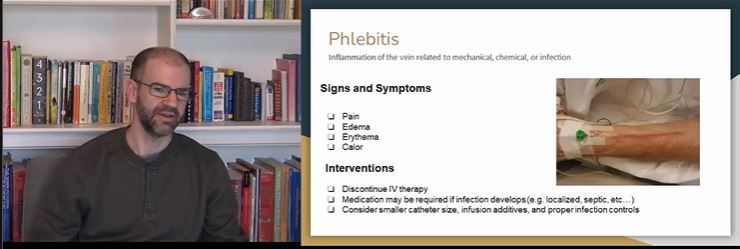
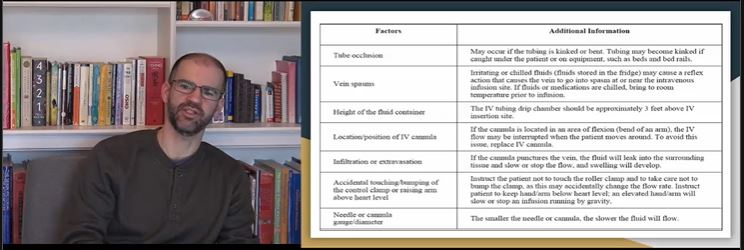
- Discuss causes and pathophysiology of peripheral vascular access (PVA) associated phlebitis, infiltration, extravasation, occlusion, nerve/connective tissue injury, infection, air embolism, venous thrombosis, catheter damage, hematoma, venous spasm, circulatory overload, allergic reaction vasovagal reflex.
- Discuss risk factors and diagnosis of PVA associated phlebitis, infiltration, extravasation, occlusion, nerve/connective tissue injury, infection, air embolism, venous thrombosis, catheter damage, hematoma, venous spasm, circulatory overload, allergic reaction vasovagal reflex.
- Discuss prevention, treatment and management of PVA associated phlebitis, infiltration, extravasation, occlusion, nerve/connective tissue injury, infection, air embolism, venous thrombosis, catheter damage, hematoma, venous spasm, circulatory overload, allergic reaction vasovagal reflex.